Showing posts with label Paul D. Marks. Show all posts

Saturday, November 28, 2015

A Moveable Inspiration

Who do you count as your early-on writing inspirations when you were getting started. Has that changed over time? How? Why? 

by Paul D. Marks

HemingwayLoebMy writing inspirations are all over the place. Initially, I aspired to be a latter-day Hemingway, sitting on the Left Bank, sipping absinthe, chatting with my literary buddies. I wanted to live the romantic, adventurous life that Hemingway describes in A Moveable Feast. Yes, I liked his clipped and concise writing style, and his philosophy of the clean, well-lighted place, as well as the eponymous story, but I also loved the idea of that writer's life and lifestyle – so his influence is, or was, as much about the writer's lifestyle as his writing style. But when I tried it, drinking and writing, I just wanted to play – got no work done. Along with Hemingway comes Fitzgerald. Stylistically different, the two just naturally fit together, at least in my mind. One of my favorites stories is still Hemingway's short story, Soldier's Home, which I read every year or two.

But my writing influences don't only come from books and authors. I've always loved movies, uh, films, since before I could walk. And a lot of my writing has been influenced by them. I saw anything and everything I could, especially on the big screen. And though there's been a lot of influence from the movies in my work, from Frank Capra and screwball comedies to Alfred Hitchcock's suspense tales, and more modern directors like Martin Scorsese and even John Dahl, the thing that's stuck with me the most is film noir. I think I'm addicted, intervention needed.

I'm also one of those people who, while everyone else is leaving the theatre, is standing there, craning my neck around them, to see the credits. I've always been interested in who wrote a movie and, if it was based on a book, who wrote that.

David.Goodis-1024x808
So from this jumping off point, I began reading James M. Cain, Raymond Chandler and other writers whose works were turned into noir or mystery movies. One of my favorites is  David Goodis (right), whose novel Dark Passage, was made into a movie with Bogie and Bacall. Having watched and liked that movie, I began reading Goodis, starting with the book that that movie was based on. But my favorite Goodis is Down There, made into the movie Shoot the Piano Player by Francois Truffaut. I have to say, though, that I'm not a fan of the movie, but the original book is terrific if you like down and dirty noir stories. Goodis has been called the "poet of the losers" by Geoffrey O'Brien, and his stories deal with failed lives and people who are definitely on the skids. They're often people who weren't always in this position though and the interesting part is seeing how they deal with their downfall – not always so well.

Along with film noir, the early hardboiled writers (though there is some crossover) have influenced my mystery-noir sensibility: Chandler, Cain, Hammett, Dorothy B. Hughes, etc. Along with these writers comes John Fante, although I'm not sure Fante would fit either the noir or hardboiled categories. Nonetheless his thinly disguised autobiographical tales of a struggling writer's life in early 20th century L.A. made enough of an impression on me that I wrote to him shortly before he died.

Later on I was drawn to Ross MacDonald with his psychological insights and James Ellroy with his corrupt and sultry grittiness. But for me Chandler, with his elegant descriptions, metaphors, characters, depiction of the mean streets and his ville fatale relationship with Los Angeles, will always be on top, as high above everyone else in his field as the Beatles are in theirs. They are sui generis, in classes by themselves.

What draws me to these writers and the noir and mystery genre in books and films is that they're about the other side of the American Dream. There's an inner core of darkness and corruption in society, a feeling of fear and paranoia. There's a moral ambiguity in the writings of most of these writers and in these films. They are the equivalent of an Edward Hopper painting (another major influence on my writing) with its cold light and shadows, filled with a sense of alienation and angst.

In much of noir and some hardboiled writing (and there is often, though not always a difference between the two) there's no sense of redemption, but much betrayal. No good guys, just bad guys and worse guys. The hero is flawed. People's own flaws and weaknesses create their fallibility and ultimately lead to their downfall. I think this appeals to me in the sense that it's a realistic, though often pessimistic and cynical, view of society. And in my own writing, both in my novel White Heat and many of my short stories, the characters are flawed, the situations ambiguous.

And now to throw a monkey wrench into the works, my two favorite books of all time are not hardboiled or noir, but both have influenced me in many ways. They are The Razor's Edge by Somerset Maugham and The Count of Monte Cristo by Dumas. The former because I relate to the character of Larry Darrell on a lot of levels, his disillusionment after the war (WWI), and his search for peace and meaning in life. And the latter because it's the ultimate revenge story and revenge is so satisfying, served cold or otherwise.

As to whether or not my inspirations have changed over time, the answer is not really. The old ones are still there, but new ones get added to the list all the time, everyone and everything from Walter Mosely, Carol O'Connell and Michael Connelly, to movies like Ghost World and Pulp Fiction.

And finally, the other early – and continuing – inspiration for my writing, as much as any writers or movies, is the City of Angels itself. I remember it well enough from when I was a kid that it still resembled Chandler's L.A. And later, my friend Linda and I would drive around the city, heading out in all directions, searching out the old buildings and the ghosts of old L.A.

L.A. is my own ville fatale. She is my mistress and a harsh mistress, indeed. But she is also my muse. But that's a whole 'nother story for the sequel.

Angels-flight-LA (1)

(Originally posted on 7 Criminals Minds Blog)

Saturday, August 30, 2014

Meet My Character Blog Hop


I was tagged by the terrific and talented Michael W. Sherer to participate in the Meet My Character blog tour/hop.  Michael recently posted his, and you should check it out: http://www.michaelwsherer.com/blog.htm?post=967483

Mike is the Thriller Award-nominated, best-selling author of Night Blind, the first in the Seattle-based Blake Sanders thriller series, which was also named a best book of 2012 by The Examiner’s “Miami Books.” Mike has published six novels in the award-winning Emerson Ward mystery series and a stand-alone suspense novel, Island Life, which was a USA Book News “Best Books” award-winner in 2008.

http://www.emersonwardmysteries.com
http://www.islandlife-thenovel.com
http://www.michaelwsherer.com
michael.w.sherer@facebook.com

So here’s my answers to the Character Blog Hop questions:

1) What is the name of your character? Is he/she fictional or a historic person?

storm2 Zach Tanner is a fictional character in my stand-alone novella Vortex. Zach is, or was, a cocky guy who joined the National Guard with three of his high school buddies. But after his tour in Afghanistan some of that cockiness has been knocked out of him, big time.


2) When and where is the story set?

The story is set in Los Angeles in the present, or at least the not-too-distant past. It begins with a flash open of a chase on Pacific Coast Highway. Zach and his high school sweetheart, Jess, are being chased by a hot red Camaro. Jess wants Zach to talk to their pursuers: He responds: “We can't go back. Don't you understand, they'll kill us.” “They're your friends,” she says. "Yeah," Zach says, then thinks to himself: ‘The first rule of war is know your enemy. And I knew mine, too well—or maybe not well enough.’ —And that’s the problem, the people chasing him are his friends—or were.


3) What should we know about him/her?

Zach and his three buddies enlisted together. Served together. Did some bad shit together and thought their bond would never break. But war changed Zach more than he could ever imagine. And maybe it changed his buds too, but in the opposite way. Now the former best friends are enemies. And the collateral damage could be Jess or Zach’s brother or his new love.


4) What is the main conflict? What messes up his/her life?

Don’t want to give too much away. But: Zach and his buds set something in motion while in Afghanistan that has major repercussions on their return home. Zach has a change of heart...but his buddies don’t.


5) What is the personal goal of the character?

His immediate goal is to protect his girlfriend, Jess, and get them away from his former pals, who think they might know something. His long term goal is to put it all behind them and live a normal life, after this chain of events that might end up taking several lives.


6) Is there a working title for this novel, and can we read more about it?

Vortex. And, unfortunately nothing more yet, but stay tuned for further updates.


7) When can we expect the book to be published?

Not sure. Hopefully not too distant future.


I’ve tagged three terrific authors to carry on the bunny, I mean blog hop:

Max Everhart is the author of Go Go Gato, a terrific debut mystery. He writes and reviews mysteries, crime thrillers and detective fiction, when playing hooky from teaching English and Creative Writing. http://www.maxeverhart.com/

Jan Grape is an Anthony award-winning writer with a successful mystery series and more than two dozen short stories to her credit. Her novels include, Austin City Blue and Dark Blue Death, both featuring Austin Police detective, Zoe Barrow.
http://www.sleuthsayers.org/

G.B. Pool (Gayle Bartos-Pool) is a former private detective and once a newspaper reporter for a small town weekly. She writes short stories as well as two detective series, one featuring Johnny Casino, an ex-mobster, and also Gin Caulfield, an over fifty gal who’s still packing heat. G.B. teaches writing classes: “The Anatomy of a Short Story,” ”How To Write Convincing Dialogue,” and “How To Write a Killer Opening Line.” Website: www.gbpool.com .

Monday, May 26, 2014

The Writing Process Blog Hop

Thriller Award nominee Michael Sherer tagged me to join the Writing Process Blog Hop. Check out Mike's writing process at michaelwsherer.com . And at the end of this post I will tag four other authors who will post about their writing process on their blogs on June 2nd: Craig Faustus Buck, Stephen Campbell, Mark Danielson, and Dianne Emley.

It's always interesting to see different authors' processes. Everybody does it differently, so here goes:

clip_image0021. What am I working on?

Since the sequel to White Heat is done and that, along with another novel, are with an agent, I'm working on a couple of different things. Two novellas right now. One for a publisher that specializes in novellas and the other one is just for me, at least for now.

The first is a hardboiled, noirish story of a soldier coming back from the war in Afghanistan. While there he and his buddies pull a fast one and now that they're back they find their scam is catching up to them in more ways than one.

The other novella is a mystery, more of a mainstream mystery than hardboiled or noir. But it does have an unusual angle in that it's all set in one location. And that created some challenges, but half the fun is overcoming those challenges. I guess you could call it "high concept".


2. How does my work differ from others of its genre?

We all bring a part of ourselves to whatever we write, so my personal experiences color everything I write, as every other writer's experiences color what they write.

There's really nothing new under the sun if we want to be honest. It might hurt our egos a bit, but it's been said that there are five (or seven, depending on who's talking) basic plots and they were all done by Shakespeare a long time ago. So what makes any of our works different is what we bring to them, the little pieces of ourselves that we insert, the insights, our personal and life experiences.

Even when just doing a work-for-hire rewrite job, I will do it differently than the next person because of who I am. So what makes my story and novel writing different? I think my characters live in a world of grays rather than black and white. Most of my characters are flawed, nobody wears the proverbial white hat, more so they wear a "gray" hat.

Also, several of my lead characters are people out of "time"—not in the sense that time is running out, although maybe that too—but in the sense that time has passed them by. They are "dinosaurs," living in the present in their bodies but their minds are in the past and they look at the world from that perspective. They have to adjust to the way things are today, and sometimes that isn't so easy. Often, my characters are not just "out of time," but also out of place, not quite fitting into the world in which they live.

clip_image004And in my story Angels Flight, from the collection L.A. Late @ Night, Tom Holland, the main character and an LAPD cop, is definitley out of his element in both time and place when he's assigned to work with a community liason from the mayor's office, who is about as opposite from him as anyone can be.

They are also often haunted by the past. In White Heat, the main character, Duke, is haunted by his past and all the mistakes he has made and continues to make. Bobbie in The Blues Don’t Care, the other novel I mentioned that's with the agent, is out of place in the sense of not fitting in with 1940’s American society.


clip_image006
3. Why do I write what I do?

'Cause I don't know anything about making frappés. The cartoon character Popeye says, "I yam what I yam and that's all what I yam." And it's true, what else can we be, what else can we do? And what else can we write, if not what speaks to us personally?

I write a variety of things, but most would fall into the mystery genre or one of its sub-genres. That said, I've had over 30 short stories published. Some are mainstream, some humorous or satirical and many are noir or hardboiled stories. So to try to come up with a unified field theory that would apply to all of them: I write what I do because I’m trying to understand something or get a question answered. Something that puzzles me or intrigues me or bothers me. Even in my mysteries, at least most of them, I’m trying not just to solve the mystery but to explore some aspect of society and/or the characters. To see where they and we are coming from and where they and we are going. Sometimes the road isn't pretty or has a lot of potholes, but at least I can learn something from the journey.

For example, in my story Dead Man's Curve, from the Last Exit to Murder anthology, there is a mystery and a dead body. But the part that interests me the most is the main character, Ray Hood's, bumpy road to (hopeful and possible) redemption, which occurs in the context of trying to solve the mystery, but to me is the much more interesting aspect of the story.
clip_image008
I also tend to write a lot about, or at least set a lot of stories in, Los Angeles. My family goes back here longer than most and it's a city that intrigues me, both in terms of its reality and its literary and movie heritage. It's a place that lives both in the past and the present and, especially, the future. There are still, though fading fast, remnants of the old L.A. of my grandparents and then there's the new L.A. that's hip and trendy and that dichotomy of the old and new, the "in" and "out" is what intrigues me and inspires much of my writing.


4. How does my writing process work?

clip_image010I'm what's commonly referred to as a "pantster"—I write by the seat of my pants, at least for the first draft or two. I basically sit down at the computer and let it fly. Whatever comes comes—stream of consciousness and I don't care how good or bad it is or how much will be kept or cut. But I do get to know the characters and story this way. I have a basic idea for a story before I start, maybe even some notes for characters, scenes or other bits in my head or written down. But I hate outlining. I just don't think in those terms. And I usually do my first draft in screenplay format. Like:

EXT. BEACH – DAY
Joe runs from several men dressed in black Ninja outfits. They look out
of place on the beach, but Joe really looks out of place with his black tie
and tails running along the water's edge.

And the above is probably even more detailed than I would get in my first draft. It's mostly just the scene setting, in this case the beach, and dialogue, that goes down the middle of the page, plus maybe a little action. Little to no description.

So, in eseence, that screenplay draft is my outline, but it's also a story with dialogue and as bare as it is it's more fleshed out than a true outline.

And I may or may not keep much, most, any of it. But it's a start. But for me the real writing comes in the rewriting phases. That's where all the fine tuning and polishing and hopefully the magic happens. With each draft you see a clearer picture and everything starts to come into focus.

I've seen other people who labor over each word and sentence as they go along so they probably don't have as much revising to do. But for me, that's where it all really starts to take shape. I pretty much let it fly in the early drafts and the real shaping, honing, fine tuning, polishing, come together in the revising. I might have ten drafts – or more – on a project, but some of them may have only have a handful of changes while others have wholesale changes in plot, character and incidents, all of which need to 'come together' in 'the end'.

The worst part of the revision phase is that it's an endless process, because every time you read the story, even if it's been published, you find holes that need plugging and things that you want to change, from small things like typos, to major things like plot points and characters. And no matter how many times you go over it with the proverbial fine tooth comb, no matter how many times other people go over it, you will always miss something, even after it's published.

And so with this blog I’m sure I’ll find something that I wish I’d said differently, but luckily once I post it it’s done and I have to leave it alone ….or maybe just one more tweak?

~.~.~

And now I’m handing off to four other fine writers (in alphabetical order), who will tell you about their processes next Monday, June 2nd:


Craig Faustus Buck is an L.A.-based journalist, nonfiction book author, TV writer-producer, screenwriter, short-story writer and novelist. Among his six nonfiction books, two were #1 NYT bestsellers. He wrote the Oscar-nominated short film Overnight Sensation. He was one of the writers on the seminal miniseries V: The Final Battle. His first noir mystery novel, Go Down Hard, which his agent is currently shopping, was First Runner Up for Killer Nashville's Claymore Award. His indie feature, Smuggling for Gandhi, is in preproduction. Stark Raving Group published his novella, Psycho Logic in May, and the novella's prequel, his short story "Dead End," is a current Anthony Award nominee.
www.craigfaustusbuck.com


~.~.~


Stephen Campbell was born and raised in Ohio, but after two blizzards in a single winter decided that enough was enough and moved to Florida to pursue his dream of becoming Travis McGee. While failing miserably at living the life of a boat bum doing favors for friends he did manage to graduate from the University of South Florida and stumble his way into the software business. Stephen loves reading fiction of all types, but most enjoys mysteries and thrillers.  His first full-length novel, Hunters Gamble, will be published in 2014.
www.stephenrcampbell.com
~.~.~


Pilot/novelist Mark W. Danielson has been flying and writing most of his life.  Seeing his small article printed in a 1972 newspaper led to his having over one hundred non-fiction articles and five mystery novels published.  Twice-selected as the US Navy’s top aviation safety author while on active duty, he now flies as an international airline pilot, spending much his time away writing.  Spectral Gallows, the latest in his Fort Worth Homicide Detective Maxx Watts series, takes Watts and partner Blaine Spartan into the paranormal world at the haunted Scott Theater to solve a decades-old hanging.  Please visit  Markwdanielson.com

~.~.~


Dianne Emley is a Los Angeles Times bestselling author and has received critical acclaim for her Detective Nan Vining thrillers, including The First Cut and Love Kills, and the Iris Thorne mysteries including Pushover.  Her standalone, paranormal thriller, The Night Visitor, will be published 9/16/14. Her short stories have been published in Literary Pasadena and other anthologies and her books have been translated into six languages.  A Los Angeles native, she lives in the Central California wine country with her husband.  “Emley masterfully twists, turns, and shocks.” —Tess Gerritsen
 Website: www.dianneemley.com
Twitter: @DianneEmley


Friday, May 23, 2014

Film Noir Double Header


Crooked Way Collage -- D1  -- 3-14 -- w signature The Crooked Way: 12:45pm, Pacific Time, Friday, 5/23/14. W/ John Payne. Pretty good, but not great, 'B' noir.


Raw Deal: 2:15pm, Pacific Time, Friday, 5/23/14. W/ Dennis O'Keefe, Claire Trevor. Directed by Anthony Mann. Others like this one better than I do. More noir-ish than real noir, IMO. But I'm here to serve, so thought I'd put it up.


Joseph Emmett Sullivan: [who is being visited in prison by Ann] Next time you come up, don't wear that perfume.
Ann Martin: Why not?
Joseph Emmett Sullivan: It doesn't help a guy's good behavior.

1287620972


Monday, May 5, 2014

D.O.A. -- Ultimate High Concept movie -- film noir


doa-movie-title_zpsb8a0523d Film Noir Alert: D.O.A., 3:30pm, Pacific Time, Monday, May 05, 2014, Turner Classics.

I think I've said this before but in my opinion this is the ultimate "high concept" story. Murdered man has to find his murderer...before he dies.

With Edmond O'Brien. And Neville Brand, one of the great movie villians. Good movie! Some great L.A. (the Bradbury Building) and San Francisco locations.

Dr. MacDonald: Of course, I'll have to notify the police. This is a case for Homicide.
Frank Bigelow (O'Brien): Homicide?
Dr. MacDonald: I don't think you fully understand, Bigelow. You've been murdered.

doa-film_l (1)


Sunday, May 4, 2014

A Kiss Before Dying

Film Noir Alert: A Kiss Before Dying, 7:15pm, Pacific Time, Sunday, May 04, 2014; Turner Classic Movies.
Kiss Before Dying 2
W/ Robert Wagner, Joanne Woodward. Remade later with Matt Dillon and Sean Young.
Interesting twist, though it comes early on.

Leo Kingship: What was accomplished by it?
Ellen Kingship: What has to be accomplished by it? Some people do things out of nothing more than sentiment. Softness, you'd probably call it.
Leo Kingship: As opposed to my callousness? My hardness? I think, Ellen, you mistake parading an emotion for feeling one.

Tuesday, August 13, 2013

A NOIR KISS TO BUILD A DREAM ON


A couple "rare" Mickey Rooney noirs show up on Turner Classics on Tuesday, August 13, 2013.  "The Strip" and "Quicksand". movie_42107

Rooney was trying to change his boy-next-door-image.  Does a pretty good job of that.

The movies are decent, low budget B noirs.  “Quicksand” has the added advantage of Peter Lorre and Jimmy Dodd, the chief Mousketeer.  

"The Strip" also features the Louis Armstrong classic song, "A Kiss to Build a Dream On." 

Good L.A. locations in both.


strip

Wednesday, January 16, 2013

"WHITE HEAT" CHOSEN AS ONE OF THE BEST FICTION BOOKS OF 2012

Rosa St. Claire at Examiner.com just named my novel White Heat one of the best fiction books of 2012, along with Megan Abbott's Dare Me, Blind Night by Michael W. Sherer, Merry Christmas, Alex Cross by James Patterson, The Casual Vacancy by J.K. Rowling and a handful of others. I'm honored to be included with these great writers.  http://www.examiner.com/review/best-fiction-books-of-2012-and-new-titles-for-2013


Tuesday, September 11, 2012

Bogie, Bacall, David Goodis & a Return to ‘Dark Passage’


277 copyDark Passage (1947) with Humphrey Bogart and Lauren Bacall, screened on Los Angeles station KCET over Labor Day weekend and on Turner Classics on Wednesday of this week. The screenplay, by Delmer Daves (who also directed), is based on a novel by David Goodis. This is a movie that I like to see at least once a year, both for the story and the terrific San Francisco locations, some of which you can still see today.
Vincent Parry, an innocent man, is thrown into San Quentin for the murder of his wife. For a Goodis story it has what might be considered a happy ending. And I think, in this case, the movie improves on the book. It takes what's good about the novel and fleshes it out in ways that68741_n (1) copy work.
Historian and critic Geoffrey O'Brien said "[Goodis] wrote of winos and  barroom piano players and smalltime thieves in a vein of tortured lyricism all his own, whose very excesses seemed uniquely appropriate to the subject matter. As his titles announce—Street of the Lost, Street of No Return, The Wounded and the Slain, Down There—he was the poet of the losers…" *  
It is through the movie version of Dark Passage that I discovered Goodis many years ago. And he is now one of my favorite writers – truly the King of Noir. His stories often deal with people who were once riding high and who've fallen on hard times, to say the least.
Goodis did a stint as a Hollywood screenwriter, eventually leaving Hollywood to return to his native Philadelphia, where he led an "interesting" life to say the least.
dark_passage_1947 (1) If I had to pick a favorite Goodis novel it would be Down There, upon which Truffaut's movie Shoot the Piano Player is based. And I know what I'm going to say is heretical to some, but I like the book a lot more than the movie in a lot of ways and, in fact, I don't like the movie much at all, though it's still worth watching. That said, Dark Passage, both the book and the movie are definitely worth checking out.
 
*Hardboiled America, Lurid Paperbacks and the Masters of Noir; Geoffrey O'Brien; Da Capo Press


Wednesday, August 29, 2012

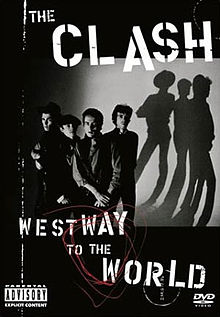
Noir Music from The Clash


 SOMEBODY GOT MURDERED – THE CLASH

 Somebody got murdered,
His name cannot be found,
A small stain on the pavement,
They'll scrub it off the ground.


GUNS OF BRIXTON – THE CLASH

 
When they kick at your front door,
How you gonna come?
With your hands on your head,
Or on the trigger of your gun.


LONDON CALLING -- THE CLASH


London calling to the imitation zone,
Forget it, brother, you can go it alone,
London calling to the zombies of death,
Quit holding out, and draw another breath,
London calling, and I don’t wanna shout,
But while we were talking, I saw you nodding out,
London calling, see we ain’t got no high,
Except for that one with the yellowy eyes.

The ice age is coming, the sun’s zooming in,
Engines stop running, the wheat is growing thin,
A nuclear error, but I have no fear,
‘Cause London is drowning, and I live by the river.


From: http://pauldmarks.tumblr.com/ 
Facebook: www.facebook.com/paul.d.marks 

Saturday, June 30, 2012


La Crescenta Library Event – July 2012


Ashley Ream & Paul D. Marks
Join Paul, Sue Ann Jaffarian (author of the Ghost of Granny Apples Mystery series and the Madison Rose Vampire Mystery series, and Michael Mallory (author of The Mural and the Amelia Watson Mystery series) for a panel/discussion on "Things That Go Bump in the Night".

When:  Saturday, July 28, 2012, 2:00 PM

Where: La Crescenta Library
            2809 Foothill Blvd.
            La Crescenta, CA, 91214

Thursday, April 26, 2012

WOULD YOU TALK SOMEONE OUT OF BUYING YOUR NOVEL? -- I DID.


I was at the Sisters in Crime/Los Angeles booth at the L.A. Times Book Festival at USC over the weekend, selling my new novel WHITE HEAT, as well as several anthologies in which stories of mine appear.  I've been going for several years, though this is the first time I've had a novel that was all me to sell.  So that was exciting.

And it's always nice to socialize with both the public and my fellow Sisters…and Brothers in Crime.  To see people I haven't seen for awhile and meet new fellow crimesters.

But the main objects are to increase the visibility of Sisters in Crime and, of course, to try to sell books.  So why would I try to talk someone out of buying my new novel that I want as much attention and word of mouth as possible for?

Early in my time at the booth a woman came by and talked to me about the various anthologies and the novel.  We had a nice conversation about the books and other things.  And she seemed interested, but ultimately didn't buy anything.  I didn't think anymore of it.

But awhile later she returned with a young man in tow.  He looked to be about fifteen and it appeared from their conversation that she wanted to buy the novel for him.  I was happy that she'd returned and wanted to buy a book.

However, since the book was clearly for her son I felt like I had to say something about the content.

To give you an idea of what the book is about here's the blurb for it: WHITE HEAT is a mystery-thriller that takes place during the 1992 "Rodney King" riots in Los Angeles.  P.I. Duke Rogers finds himself in a racially charged situation.  The case might have to wait....  The immediate problem: getting out of South Central Los Angeles in one piece – during the 1992 L.A. riots  – and that's just the beginning of his problems.  And while he tries to track down the killer he must also deal with the racism of his partner, Jack, and from the dead woman's brother, Warren.  He must also confront his own possible latent racism – even as he's in an interracial relationship with the murder victim's sister.

On the surface the story is a mystery-thriller.  But it also deals with the harsh realities of race and racism.  And in doing so some of the characters use extremely offensive language, from the F word to various racial epithets.  Reviewer M2 says this of White Heat: "'White Heat' is a tough, tersely-written book featuring tough, complicated, and not always lovable characters who might push many readers to the very edge of their comfort zone. But it's honest and it's real, and it doesn't pander to its audience by providing pat or phony answers to the many complex issues it raises."

And while I want as many readers as possible and want people to enjoy the novel on both the plot and deeper levels, I felt I had to warn the young man's mother about the various intense aspects of the book. The choice was hers and she ultimately chose not to buy it and I lost a sale.

I don't believe in censorship of any kind, but this was, in a sense, self-censorship.  When it came to someone as young as this kid I felt it was my obligation to tell his mother and let her or them make up their minds.  I'm not sorry I told them and maybe someday he will read it.

What would you have done?


Tuesday, May 10, 2011

MORE STARS THAN THERE ARE IN HEAVEN – MGM: HOLLYWOOD'S GREATEST BACKLOT – PART II

MGM book off Amazon -- D1We're back for Part II of my interview with Steven Bingen, co-author with Stephen Sylvester and Michael Troyan of MGM: HOLLYWOOD'S GREATEST BACKLOT. If you missed Part I scroll down and catch up on it before reading Part II. Enjoy:

Welcome back, Steve. What are your and your co-authors backgrounds? Tell us a little about your personal as well as Hollywood backgrounds.  mgm-logo11

There are 3 credited author's on this book, "MGM: Hollywood's Greatest Backlot."
Years ago our agent was told by a publisher that there could never be a "unified vision" on a book with 3 perspectives. That publisher didn't understand that we all felt exactly the same way about Hollywood's backlots and shared exactly the same odd obsessions. Whatever the book's virtues and flaws, I defy anyone to figure out where one of our voices stops and another's starts. Our collaborating was just like the production of most Hollywood movies. The book's very existence is a sort of 2-Dimensional denial of the auteur theory. Creativity by committee, if you will.

Mike (Troyan) and I both came out of Warner Bros. Corporate Archive – although his background is more academic than mine. I have a background rooted in film production while his is more literary. Mike is the author of "A Rose for Mrs. Miniver," about MGM star Greer Garson – which I can't recommend highly enough, by the way.

Steve (Sylvester), my other partner is in possession of vast amount knowledge and a vast collection of materials relating to MGM as a physical place. He's the only one of us who was actually able to boast of visiting the MGM backlot before it was all destroyed. In some ways, in visiting the studio he was able to do what I've aspired to do for my whole life. Because I was too late to see the place, the studio always seemed almost mythical, like Shangri-La or Camelot to me. But it was real and Steve was there. I wanted that perspective in the book. It just seemed like a good fit for the three of us to coauthor – and it was.

Who have you contacted (MGM old-timers, etc.) and have they been willing to help?

MGM Backlot #2 -- New York Street 3 --"Show Biz"I don't know if it was a conscious decision, but we tended to avoid talking to movie stars because their stories have been told so often, and because their worlds at the studio were so insulated. Elizabeth Taylor was at MGM for decades, but her experience on the backlot would have consisted of being driven through the sets in a limo to her particular location. I doubt if she would have had much opportunity or interest in exploring a place which wouldn't have seemed at all unusual to her because of the odd circumstances of her life. It would be like asking a coal miner what was extraordinary about a mine shaft!

On the other hand we spoke to a lot of "regular people," some of whom worked on the lot for their entire careers who had amazing stories to tell, and who realized, even at the time what a bizarre and wonderful place MGM really was. Some of our best stories were from people who grew up near the studio who used to climb the fences and explore inside as children. I really do envy those people.

How many backlots were there? Where? What did they have on them?

MGM Backlot #2 -- European Street --"Show Biz"MGM wasn't a single lot. Lot One contained the soundstages, corporate offices and post production facilities. The backlot was literally at the rear, or back, of the plant. As the studio grew it expanded across the street onto a property known as Lot Two. Lot Two contained a small-town street, residential districts, railroad stations (with working trains) – the largest of which replicated New York's Grand Central Station. It also had European and Asian villages, a jungle with a bridge, man-made lake, gardens, pools, castles, Southern and English estates, and a half dozen blocks, built full scale, replicating New York City and all its Burroughs – right down to the last street sign, man-hole cover, and fire escape.

Up the road a few blocks was Lot Three, which was even larger and contained three distinct old westerns settings, two more waterfront districts, a tropical rainforest, rock formations, winding roads, a Mississippi steamboat, a circus set, military bases, a POW camp, a vintage era New York Street, farms, ranches, an Arabian Knight districts and the world's largest process tank for shooting miniatures.

Lot Three was itself surrounded by the satellite lots; Four, Five, Six and Seven – which collectively housed zoos and stables, more sets, storage sheds, partial fleets of aircraft and locomotives, a peat farm…. whatever there wasn't room for anywhere else. When L. B. Mayer, the boss, took an interest in horse racing in the 40's, people used to suggest that the Santa Anita racetrack should perhaps be rechristened Lot Eight!

What are your philosophical thoughts about the loss of the backlots?

I've always been haunted by and interested in Hollywood's backlots in general.  The idea that there exists places in the world where there are entire phantom towns constructed to mimic the real world – and yet where no one has ever lived, could ever live, is fascinating and mysterious and a little creepy.  Backlots are supposed to duplicate our lives, our homes, and the city streets we move thorough every day, and yet although they can be as familiar to us as places we've lived in our actual lives, they remain unknowable, untouchable, just out of normalcy and of recognition.

Backlots are like the purest form of architecture.  They really are designed just for aesthetic reasons.  The backlot architect doesn't have to worry about service elevators or building codes or faulty wiring.  A backlot just has to look good and to set a mood in order to do its job.  There are no real world considerations involved. Find an architect and ask him where else in the world that happens?

During the writing of this book it occurred to me that Hollywood's backlots are responsible for an awful lot of the defining non-movie architecture of the last century as well.  Think about it.  If Hollywood hadn't started designing sets to suggest moods or foreign settings would we really have shopping malls, or theme parks, or places like Las Vegas today?  All of these places, for good or bad, came out of backlots and the people who designed them.

I used to give tours of Warner Bros. Studio in my capacity as historian for the company. Once I was showing the family of some executives an artificial lake out on the backlot and describing how that lake had been dressed as India for a film which I'd seen shot there. I was going on about how the set had looked exactly like the real India when all of a sudden it occurred to me, and I told my bemused guests this, that I'd never personally been to India at all. That my entire idea of what India is, in fact came not from the real thing, not from India at all, but rather from movies, some of which had undoubtedly been made right where we were standing right at that moment!

You should talk to my wife, she grew up in India for a time – but yes, she does have an American birth certificate.... But changing elephants in midstream now, What is your next project?

I can't speak for my partners…but…I will.  Honestly, I'm not sure if I'll ever be able to shake off the current project!  After all, I'm doomed to see the MGM backlot every time I sit back to relax and turn on the TV!

We'd love to make this book the first volume in a series about all 7 of Hollywood's major studio lots – the Seven Sisters.  I'm just not sure if logistically, and legally it's going to be possible to do so.  To look at it from the viewpoint of the other studios I can't really blame them for not wanting someone from the outside to come around and start rooting around in their past.  We were able to "do" MGM because so many different hands have been running the company and the people who owned the copyright on the materials we needed weren't the original owners. But I don't know if that set of circumstances could come up again in regards to another studio. We'll see…

"MGM: Hollywood's Greatest Backlot" is available in bookstores and at Amazon. Click here:


Thank you, Steve, for joining me here at Cafe Noir. And good luck with the book.

Sunday, March 27, 2011

MORE STARS THAN THERE ARE IN HEAVEN – MGM: HOLLYWOOD'S GREATEST BACKLOT – Part I

MGM book off Amazon -- D1 - Copy Only one studio in the golden days of Hollywood could claim as its motto "more stars than there are in heaven" and actually mean it: MGM – Metro-Goldwyn-Mayer.

Not only did MGM have more stars than in heaven it also had more backlots – the place where dreams were made. In Culver City, CA, besides the main studio lot, were eight backlots, depending on how one counts them. I have the distinction of being one of the last people to have shot a film on MGM Backlot #2, one of the two main backlots and the last one standing, which is an interesting story in itself, but for another time.

Because of that, I was contacted by Steven Bingen, an archivist at Warner Brothers, who, along with Mike Troyan and Steve Sylvester have authored a book for Santa Monica Press called MGM: HOLLYWOOD'S GREATEST BACKLOT – with a foreword by Debbie Reynolds.

Unfortunately MGM ain't what it used to be and, in fact, the main lot, the only lot left, is now owned by Sony. All the backlots met with the wrecker's ball and made way MGM starsfor condos or other developments.   "They paved paradise and put up a parking lot," as Joanie Mitchell once sang. Luckily the photos, memories and stories of people who remember the backlots have been collected in this book.

What follows is Part I of my interview with Steve Bingen about the book and the backlots. Please note that the interview was done before the book was finalized and released so that is reflected in the interview's wording.


Thank you, Steve, for coming to Cafe Noir. What gave you the idea for this book – what was your inspiration?

There have been books written about MGM before, and I recommend them all. But there was always a major part of the equation, maybe the major part of that equation missing on each and every one of them. All of these books would inevitably contain one aerial shot of the lot – usually the same one – and a single paragraph, maybe, about soundstages and backlots at the studio. And that would be it!
This struck all three of us as mysterious. It always seemed to us that if you were writing about a place, and MGM was indeed an actual physical place, then why would an author choose to tell us what amounted to virtually nothing about that place? People always describe Hollywood's studios as "dream factories." Well that phrase isn't bad for what it is, and anyone who was there will tell you that life in those dream factories was if anything, even more interesting than the product the factory was producing. Yet no one had ever talked about that factory. Ever.

What we wanted to do with our book, was to zoom in on that single aerial photo in everyone else's book, to climb the fences of one of those dream factories and look around a bit.

Tell us about the book and what makes it unique.

Let me just say that the book is formatted as a "virtual tour" of MGM Studios.  The text mostly consists of a walk around the lot, circa 1960, with every major set and department described and illustrated.  We've included hundreds of unseen photos of the place as well, many of which were saved from catacombs and basements and archives which no living person has accessed in decades.  I'm not sure about the "not living" people.

What did you learn about MGM and/or the various backlots that was new or really interesting?

I thought it was fascinating and haunting how many famous movies and television shows shot on that lot for which no one ever suspected that what they were watching was a backlot at all. Even if audiences were watching a set they had already seen in hundreds, thousands of other films, people seemed to accept that a curved European street was Paris one week and Transylvania the next just because a visual cue, a street sign or an establishing shot told them it waimg577 -- adjusted-sharpened - cright_edited-3-a copys. Something like a fifth of all the movies made in the United States, historically were made somewhere on the MGM backlot! Sadly, and decades after the fact, this only proves how successfully these facades were at doing what they were designed to do. Even today in an era of wide-spread location shooting and so-called digital backlots, Hollywood's few surviving actual backlots manage to succeed in constantly fooling today's "sophisticated" audiences time after time. I recall watching the Super Bowl on TV recently, and counting at least 4 commercials during the broadcast which replicated real locations using current LA backlot sets which every single person in that game's vast worldwide audience had seen hundreds of times before. I can't help but wonder how many of those people, besides me, have ever suspected that was the case? 


NY-St -- D1aWhat were some of the movies shot on them?

In the book we came up with a list of every major backlot set with the titles of films shot on that set listed underneath. I'm not sure how much of that list is going to be published, and in what form, but as it stands now those lists alone, in reduced print, equal over 40 pages of text, and frankly are not even close to being comprehensive! It amuses me that people write books about, and make pilgrimages to, locations where their favorite scenes from their favorite films were shot. You know, Griffith Observatory in the Hollywood hills where a single scene in "Rebel Without a Cause" was recorded for example. Well, that location pales in significance to any single inch of any single movie studio – which has probably hosted hundreds, thousands, of films across the decades. I sometimes drive though those vast anonymous subdivisions which were built where MGM's Lot Two once stood, and I can't help but wonder if the people in those tract homes on that land, know, or care, how historic their property really is. Movie-wise that real estate is more important than any single block of Hollywood Boulevard ever was! 

Anyway, I think it's kind of fun to hopscotch through these lists and realize how versatile these sets were, and how much of our shared movie memories were created on them. 

How and why did you hook up with me?

Now that's an interesting story.  I don't know if readers of this blog are aware of this but Paul directed one of the last movies ever made on the MGM backlot.  That 40 page chronological list I mentioned of films shot at the studio ends with his name on it.

I didn't know any of this. I had noticed that there were a few very tantalizing stills floating around on the internet of the studio in its very decrepit very last days.  I couldn't figure out what film these stills were from or what movie was seen in production in them.  I started asking around on the sites where these "holy grail" shots had been posted and that finally led Paul and I to a meeting where he was good enough to loan me some of these same stills and describe the strange production history of his picture "Show Biz."  I'm not going to tell that story here because I can't do so as well as he can, but needless to say it is in my book, and hopefully some of those pictures will appear there as well.  (The photo selection is still being assembled [at the time of the interview]). Let me just say that the history of Paul's movie quite a tale.  Ask him to tell it to you…

MGM: HOLLYWOOD'S GREATEST BACKLOT is a fun read and jammed full of great photos.  Anyone interested in MGM and Hollywood history should have this book.  It is available in bookstores and at Amazon. Click here:


In Part II find out about more about MGM. Stay tuned.