Showing posts with label film noir. Show all posts

Saturday, November 28, 2015

A Moveable Inspiration

Who do you count as your early-on writing inspirations when you were getting started. Has that changed over time? How? Why? 

by Paul D. Marks

HemingwayLoebMy writing inspirations are all over the place. Initially, I aspired to be a latter-day Hemingway, sitting on the Left Bank, sipping absinthe, chatting with my literary buddies. I wanted to live the romantic, adventurous life that Hemingway describes in A Moveable Feast. Yes, I liked his clipped and concise writing style, and his philosophy of the clean, well-lighted place, as well as the eponymous story, but I also loved the idea of that writer's life and lifestyle – so his influence is, or was, as much about the writer's lifestyle as his writing style. But when I tried it, drinking and writing, I just wanted to play – got no work done. Along with Hemingway comes Fitzgerald. Stylistically different, the two just naturally fit together, at least in my mind. One of my favorites stories is still Hemingway's short story, Soldier's Home, which I read every year or two.

But my writing influences don't only come from books and authors. I've always loved movies, uh, films, since before I could walk. And a lot of my writing has been influenced by them. I saw anything and everything I could, especially on the big screen. And though there's been a lot of influence from the movies in my work, from Frank Capra and screwball comedies to Alfred Hitchcock's suspense tales, and more modern directors like Martin Scorsese and even John Dahl, the thing that's stuck with me the most is film noir. I think I'm addicted, intervention needed.

I'm also one of those people who, while everyone else is leaving the theatre, is standing there, craning my neck around them, to see the credits. I've always been interested in who wrote a movie and, if it was based on a book, who wrote that.

David.Goodis-1024x808
So from this jumping off point, I began reading James M. Cain, Raymond Chandler and other writers whose works were turned into noir or mystery movies. One of my favorites is  David Goodis (right), whose novel Dark Passage, was made into a movie with Bogie and Bacall. Having watched and liked that movie, I began reading Goodis, starting with the book that that movie was based on. But my favorite Goodis is Down There, made into the movie Shoot the Piano Player by Francois Truffaut. I have to say, though, that I'm not a fan of the movie, but the original book is terrific if you like down and dirty noir stories. Goodis has been called the "poet of the losers" by Geoffrey O'Brien, and his stories deal with failed lives and people who are definitely on the skids. They're often people who weren't always in this position though and the interesting part is seeing how they deal with their downfall – not always so well.

Along with film noir, the early hardboiled writers (though there is some crossover) have influenced my mystery-noir sensibility: Chandler, Cain, Hammett, Dorothy B. Hughes, etc. Along with these writers comes John Fante, although I'm not sure Fante would fit either the noir or hardboiled categories. Nonetheless his thinly disguised autobiographical tales of a struggling writer's life in early 20th century L.A. made enough of an impression on me that I wrote to him shortly before he died.

Later on I was drawn to Ross MacDonald with his psychological insights and James Ellroy with his corrupt and sultry grittiness. But for me Chandler, with his elegant descriptions, metaphors, characters, depiction of the mean streets and his ville fatale relationship with Los Angeles, will always be on top, as high above everyone else in his field as the Beatles are in theirs. They are sui generis, in classes by themselves.

What draws me to these writers and the noir and mystery genre in books and films is that they're about the other side of the American Dream. There's an inner core of darkness and corruption in society, a feeling of fear and paranoia. There's a moral ambiguity in the writings of most of these writers and in these films. They are the equivalent of an Edward Hopper painting (another major influence on my writing) with its cold light and shadows, filled with a sense of alienation and angst.

In much of noir and some hardboiled writing (and there is often, though not always a difference between the two) there's no sense of redemption, but much betrayal. No good guys, just bad guys and worse guys. The hero is flawed. People's own flaws and weaknesses create their fallibility and ultimately lead to their downfall. I think this appeals to me in the sense that it's a realistic, though often pessimistic and cynical, view of society. And in my own writing, both in my novel White Heat and many of my short stories, the characters are flawed, the situations ambiguous.

And now to throw a monkey wrench into the works, my two favorite books of all time are not hardboiled or noir, but both have influenced me in many ways. They are The Razor's Edge by Somerset Maugham and The Count of Monte Cristo by Dumas. The former because I relate to the character of Larry Darrell on a lot of levels, his disillusionment after the war (WWI), and his search for peace and meaning in life. And the latter because it's the ultimate revenge story and revenge is so satisfying, served cold or otherwise.

As to whether or not my inspirations have changed over time, the answer is not really. The old ones are still there, but new ones get added to the list all the time, everyone and everything from Walter Mosely, Carol O'Connell and Michael Connelly, to movies like Ghost World and Pulp Fiction.

And finally, the other early – and continuing – inspiration for my writing, as much as any writers or movies, is the City of Angels itself. I remember it well enough from when I was a kid that it still resembled Chandler's L.A. And later, my friend Linda and I would drive around the city, heading out in all directions, searching out the old buildings and the ghosts of old L.A.

L.A. is my own ville fatale. She is my mistress and a harsh mistress, indeed. But she is also my muse. But that's a whole 'nother story for the sequel.

Angels-flight-LA (1)

(Originally posted on 7 Criminals Minds Blog)

Thursday, November 19, 2015

Midnight at the Internet Cafe

What is the research tool you turn to most often? How important is visiting the site of your story to your research?

by Paul D. Marks
(reprinted from 7CriminalMinds.Blogspot.com)

These days my go-to research tool is the internet, what else? It’s close at hand. It’s easy. It has “everything” on it. And it’s right all the time. Well, most of the time. I mean much of the time. Yeah.

In the olden days, BI—Before Internet—one had to go to the library or the bookstore. But if you’re a night owl like me you’d be hard pressed to find a library or bookstore open at 3am, my prime time. Not impossible, but also maybe not close by. And much as I love browsing both of those places, I’d rather do it in the middle of the night, but I guess they want to sleep and I curse them for it.

Hollywood Sign Collage D1aThen, of course, there’s first hand research, going to the location/s in your story or to primary source people. For example, if you’re writing about the Hollywood Sign in Los Angeles and you live in Los Angeles you can drive up there, annoy the people who live in the neighborhood, duck potshots from them, get close to the sign and, after running the gauntlet of angry residents, find out it’s fenced off so you can’t get there anyway, at least not right there. But you used to be able to go there. I hiked up there with a friend one time when we were doing research on a screenplay. It was fun and exciting and before the neighbors were perpetually upset—and before it was fenced off. But today it’s hard to get to, at least to get right up close to it, because it is fenced off. So what do you do? You turn to the internet or books. Or people who’ve been there or you watch through binocs or you beg everyone you know to find someone who knows someone who can get you inside the fence. And when that fails you hit the books again or the internet.

Kiss Me Deadly Angels Flight w caption d1I recently sold a story to Ellery Queen that takes place on and around Bunker Hill, no not that Bunker Hill in Massachusetts. The one in downtown L.A. L.A.’s Bunker Hill of today and the Bunker Hill of 30-40 years ago are two vastly different places. When it began in the late 1800s, Bunker Hill was a neighborhood of fancy Victorian homes for the wealthy near downtown. Over time the swells moved west and Bunker Hill became run down and the elaborate houses were turned into rooming houses. In the late 60s, redevelopment began. The people were kicked out. Some of the houses were torn down and others were packed up and moved to other locations. So, though my story takes place today it deals with elements of the long-lost and lamented Bunker Hill of yesterday. How did I research that? Well, the usual, the internet, books, etc. Watching old movies shot there—many film noirs were shot on and around Bunker Hill. But I had also spent time there as a young man, exploring the houses, getting into some, riding the original Angels Flight funicular railway. Going through the Grand Central Market that John Fante talks about in Ask the Dust, before it was remodeled. And I still have the top of a newell stairway post I liberated from one of those old Victorian houses—a memento both to L.A.’s and my own past. I’m also old enough to remember L.A. as Raymond Chandler describes it and before it started to change and “grow up”. And I remember it pretty well—first-hand research you might say.

My novel White Heat takes place mostly in Los Angeles during the Rodney King riots of 1992. I lived through that and used both personal experience and recollections of others, both civilians and cops that I know who were there to add flavor to the story. But parts of the story also take place in Calexico, California and Sparks and Reno, Nevada. I have recollections of both places, but it’s been a long time since I was there, so again I turned to the internet to be my researcher’s best friend.

But what if you’re writing something that’s set where you’ve never been. I’ve never been to the Amazon, though it’s one of my dreams. Pre-internet, I was working on a screenplay set there, so I researched it in books, etc. But I also drew on personal experiences of being in other riverine environs, transposing some of those experiences and adventures to the Amazon.

Gas_Station_1942 d1What if it’s a time you’ve never lived in or experienced firsthand? I have a character named Bobby Saxon who’s been in three published stories. I wrote a novel with Bobby that should be done soon. Those stories all take place during World War II on the L.A. homefront. Well, that’s before my time. But I know L.A. pretty well and I know a lot of its history. So I had a good foundation to start with. But I also turned to primary resources: my mom and her friends. My family goes back here a long way and my mom was an L.A. native, so she and her friends could tell me first-hand things about L.A. during the war. I supplemented that with—what else? —the internet and books. But also with maps. I wanted to know how people got from point A to point B in a time before freeways. So I bought several period street maps on eBay, as well as looking things up on the net. And, aside from the good research the maps gave me for the story, I just love looking at them and seeing how things change over time. I also got some of the flavor of the era from old movies and music of the time, both of which I love.

When I was working on a script set in New Orleans...I had to go research it in person. Had to. Wouldn’t you? I wanted it to be real and how could I make it real without actually tasting the food at Commander’s Palace? Winking smile

But what about writing about professions or places that I have no first-hand contact with, well, it’s research and again you go to primary sources when you can. Example: I’m not a doctor so I ask doctors how certain symptoms might be treated, what meds would be used, etc. As for places I haven’t been, well, sometimes I try to go, but if I can’t it’s back to the internet drawing board.

So if I had to pick one winner, it would be the internet. The world is at your fingertips.

***       ***       ***

Bouchercon2015_logoLargewAnthony -- Smaller-Sharpened JPGIt’s still not too late to read all the 2015 Anthony Award nominated short stories:

The five Anthony nominees in the Short Story category are Craig Faustus Buck, Barb Goffman, John Shepphird, our own Art Taylor...and me, Paul D. Marks. I’m honored to be among these people and their terrific stories.

I want to thank everyone who voted for us in the first round. And if you’re eligible to vote, people attending Bouchercon can vote at the convention until 1pm Saturday.

I hope you’ll take the time to read all five of the stories and vote. All are available free here – just click the link and scroll down to the short story links: http://bouchercon2015.org/2015-anthony-award-nominees/

But even if you’re not eligible to vote, I hope you’ll take the time to read the stories. I think you’ll enjoy them and maybe get turned onto some new writers.

***       ***       ***

And now for the usual shameless BSP:

Coast to Coastx_1500 (1)NEW from Down & Out Books – Coast to Coast: Murder from Sea to Shining Sea – an anthology of short mystery stories, chocked full of major award-winning authors, edited by Andrew McAleer and Paul D. Marks (Me!)

Released on 10/1 (that’s yesterday for those without a calendar, so hot off the presses)

“Envelope-pushers! A truly WOW collection by the best mystery writers out there – full of surprises only they can pull off.”
—Thomas B. Sawyer, Bestselling author of Cross Purposes, Head-Writer of Murder, She Wrote

With a Killer Cast Including:

4 Time Edgar Winner William Link • Grand Master Bill Pronzini • Scribner Crime Novel Winner William G. Tapply • Shamus Winner Paul D. Marks • EQMM Readers Award Winner Robert S. Levinson • Al Blanchard Award Winner James T. Shannon • Derringer Award Winner Stephen D. Rogers • Sherlock Holmes Bowl Winner Andrew McAleer and other poisoned-pen professionals like Judy Copek • Sheila Lowe • G. B. Pool • Thomas Donahue

Available in paperback and Kindle e-book on Amazon.  Click here to go to Amazon.

***       ***       ***

Click here to subscribe to my Newsletter: Subscribe to my Newsletter

Please join me on Facebook: www.facebook.com/paul.d.marks and  Twitter: @PaulDMarks

And check out my updated website www.PaulDMarks.com

Friday, May 23, 2014

Film Noir Double Header


Crooked Way Collage -- D1  -- 3-14 -- w signature The Crooked Way: 12:45pm, Pacific Time, Friday, 5/23/14. W/ John Payne. Pretty good, but not great, 'B' noir.


Raw Deal: 2:15pm, Pacific Time, Friday, 5/23/14. W/ Dennis O'Keefe, Claire Trevor. Directed by Anthony Mann. Others like this one better than I do. More noir-ish than real noir, IMO. But I'm here to serve, so thought I'd put it up.


Joseph Emmett Sullivan: [who is being visited in prison by Ann] Next time you come up, don't wear that perfume.
Ann Martin: Why not?
Joseph Emmett Sullivan: It doesn't help a guy's good behavior.

1287620972


Monday, May 5, 2014

D.O.A. -- Ultimate High Concept movie -- film noir


doa-movie-title_zpsb8a0523d Film Noir Alert: D.O.A., 3:30pm, Pacific Time, Monday, May 05, 2014, Turner Classics.

I think I've said this before but in my opinion this is the ultimate "high concept" story. Murdered man has to find his murderer...before he dies.

With Edmond O'Brien. And Neville Brand, one of the great movie villians. Good movie! Some great L.A. (the Bradbury Building) and San Francisco locations.

Dr. MacDonald: Of course, I'll have to notify the police. This is a case for Homicide.
Frank Bigelow (O'Brien): Homicide?
Dr. MacDonald: I don't think you fully understand, Bigelow. You've been murdered.

doa-film_l (1)


Sunday, May 4, 2014

A Kiss Before Dying

Film Noir Alert: A Kiss Before Dying, 7:15pm, Pacific Time, Sunday, May 04, 2014; Turner Classic Movies.
Kiss Before Dying 2
W/ Robert Wagner, Joanne Woodward. Remade later with Matt Dillon and Sean Young.
Interesting twist, though it comes early on.

Leo Kingship: What was accomplished by it?
Ellen Kingship: What has to be accomplished by it? Some people do things out of nothing more than sentiment. Softness, you'd probably call it.
Leo Kingship: As opposed to my callousness? My hardness? I think, Ellen, you mistake parading an emotion for feeling one.

Sunday, September 1, 2013

PITFALL – The American Dream…Well, maybe not.

"Pitfall," with Dick Powell and Lizabeth Scott (noir icon) and Jane Wyatt (mom on “Father Knows Best”) wpitfall-posterill be on Turner Classic Movies Monday 9/2/13 at 1:15 Pacific Time. Raymond Burr also shows up as the heavy, no pun intended.


"Pitfall" is a pretty good noir film, though I find the ending undermines much of what has come before. Other people see irony there, and there is. That said, I still think it just takes too much of a turn. I'm not being more clear because I don't want to give away spoilers. But all in all, it's a decent noir and worth watching.

pitfall-dick-powell-lizabeth-scott-everett

Tuesday, August 13, 2013

A NOIR KISS TO BUILD A DREAM ON


A couple "rare" Mickey Rooney noirs show up on Turner Classics on Tuesday, August 13, 2013.  "The Strip" and "Quicksand". movie_42107

Rooney was trying to change his boy-next-door-image.  Does a pretty good job of that.

The movies are decent, low budget B noirs.  “Quicksand” has the added advantage of Peter Lorre and Jimmy Dodd, the chief Mousketeer.  

"The Strip" also features the Louis Armstrong classic song, "A Kiss to Build a Dream On." 

Good L.A. locations in both.


strip

Wednesday, January 2, 2013

51-50 -- NEW NOIR SHORT STORY AVAILABLE NOW


Available on Amazon now: 51-50 -- click the title

Cleaver is a cop who just can't take it anymore. He knows he's going to step over the line, it's just a question of when. It's the smirk that blows him away in this stripped down psycho noir short story.

An excerpt:

It was the smirk that blew me away. A half grin in the eyes and mouth, mocking, laughing. Maybe at me - maybe at the badge. They were leaning against a grimy cinder block wall under a sooty sky. Thumbs hooked into pockets of baggy lowrider pants, fingers, long and lean, twisting into coded signals. Eyes hollow. Eyes I don't even want to meet in the darkest dream. Hollow men. Hollow boys. Nothing behind those eyes. Nothing. They don't care. Don't give a damn.

It was that smirk that blew them away.

~~~

Cops aren't supposed to have feelings. We do a good job of hiding them. Burying them. But we're just like everybody else. We hide them in bravado or work. We hide them in a bottle or in "inexplicable" rages. But they're there, like the molten lava in a volcano just waiting to burst through to the surface.

*****************

Reviews of "51-50":

"Hat's off Mr. Marks - noir is your playground and you do it better than any other current writer."
--Kat Yares, Amazon VineTM-Voice Reviewer

"Writer Paul D. Marks can get inside a character's head and walk around better than anybody. His latest short story, 51-50, does just that…"
--G.B. Pool, author of "The Johnny Casino Casebook 1 - Past Imperfect"

Available on Amazon now: 51-50 -- click the title

Tuesday, September 11, 2012

Bogie, Bacall, David Goodis & a Return to ‘Dark Passage’


277 copyDark Passage (1947) with Humphrey Bogart and Lauren Bacall, screened on Los Angeles station KCET over Labor Day weekend and on Turner Classics on Wednesday of this week. The screenplay, by Delmer Daves (who also directed), is based on a novel by David Goodis. This is a movie that I like to see at least once a year, both for the story and the terrific San Francisco locations, some of which you can still see today.
Vincent Parry, an innocent man, is thrown into San Quentin for the murder of his wife. For a Goodis story it has what might be considered a happy ending. And I think, in this case, the movie improves on the book. It takes what's good about the novel and fleshes it out in ways that68741_n (1) copy work.
Historian and critic Geoffrey O'Brien said "[Goodis] wrote of winos and  barroom piano players and smalltime thieves in a vein of tortured lyricism all his own, whose very excesses seemed uniquely appropriate to the subject matter. As his titles announce—Street of the Lost, Street of No Return, The Wounded and the Slain, Down There—he was the poet of the losers…" *  
It is through the movie version of Dark Passage that I discovered Goodis many years ago. And he is now one of my favorite writers – truly the King of Noir. His stories often deal with people who were once riding high and who've fallen on hard times, to say the least.
Goodis did a stint as a Hollywood screenwriter, eventually leaving Hollywood to return to his native Philadelphia, where he led an "interesting" life to say the least.
dark_passage_1947 (1) If I had to pick a favorite Goodis novel it would be Down There, upon which Truffaut's movie Shoot the Piano Player is based. And I know what I'm going to say is heretical to some, but I like the book a lot more than the movie in a lot of ways and, in fact, I don't like the movie much at all, though it's still worth watching. That said, Dark Passage, both the book and the movie are definitely worth checking out.
 
*Hardboiled America, Lurid Paperbacks and the Masters of Noir; Geoffrey O'Brien; Da Capo Press


Wednesday, August 29, 2012

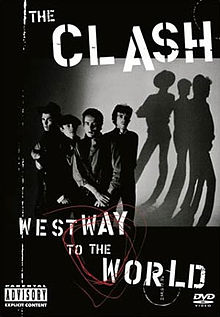
Noir Music from The Clash


 SOMEBODY GOT MURDERED – THE CLASH

 Somebody got murdered,
His name cannot be found,
A small stain on the pavement,
They'll scrub it off the ground.


GUNS OF BRIXTON – THE CLASH

 
When they kick at your front door,
How you gonna come?
With your hands on your head,
Or on the trigger of your gun.


LONDON CALLING -- THE CLASH


London calling to the imitation zone,
Forget it, brother, you can go it alone,
London calling to the zombies of death,
Quit holding out, and draw another breath,
London calling, and I don’t wanna shout,
But while we were talking, I saw you nodding out,
London calling, see we ain’t got no high,
Except for that one with the yellowy eyes.

The ice age is coming, the sun’s zooming in,
Engines stop running, the wheat is growing thin,
A nuclear error, but I have no fear,
‘Cause London is drowning, and I live by the river.


From: http://pauldmarks.tumblr.com/ 
Facebook: www.facebook.com/paul.d.marks 

Friday, February 25, 2011

RAISING CAIN: CONVERSATIONS WITH JAMES M. CAIN

Packed and Loaded Cover off Amazon--cropAndrew McAleer is the publisher of the venerable Crimestalker Casebook mystery magazine. He's also authored three well-received mystery novels, including "Bait and Switch" and "Appearance of Counsel," as well the non-fiction "Mystery Writing in a Nutshell," written with his father Edgar winner John McAleer, and the number one best seller "101 Habits of Highly Successful Novelists: Insider Secrets from Top Writers".

Mr. McAleer, along with Harry Sapienza, has recently ushered ajames-m-cain-2--adjusted D1 project of his father John McAleer's to fruition: PACKED AND LOADED: CONVERSATIONS WITH JAMES M. CAIN, who as many of you know is the author of "Double Indemnity," "The Postman Always Rings Twice" and "Mildred Pierce," to name just a few.

Not only does Cain discuss his first notions to be a writer, his newspaper days and his Hollywood years. He also reveals his brutally honest thoughts on everyone from Hammett and Chandler to Hemingway, Fitzgerald, Arthur Miller and even Marilyn Monroe. The book is peppered with epigraphs from Elmore Leonard, Sue Grafton, Robert B. Parker and Dennis Lehane among others.

McAleer Quote 1a

andew mcaleer -- adjusted D1Q: Welcome, Andy. Before we get to PACKED AND LOADED, maybe you can tell us a little bit about yourself and your background? I understand that you're a prosecutor in Massachusetts. It seems that your profession has had a definite impact on your novels, can you expand on that a little?

A: Thanks, Paul. I’ve had I think a fairly interesting legal career so far. Right after law school I started a small law practice in the town I grew up in – Lexington. The only legal books I had were my grandfather’s old law books dating back to the 19 teens and 20s including the Mr. Tutt casebooks by Arthur Train, which I devoured and highly recommend. I did a lot of “country” law – real estate, probate, criminal defense. My first book Appearance of Counsel is about a small-town lawyer and my second and third novels Double Endorsement and Bait and Switch about a PI. I prefer the malice domestic formula used by Rex Stout and many of the Golden Age of mystery greats. My latest novel Fatal Deeds (Cherokee McGhee) will be released in August 2011 and is about a retired sheriff Gus Churchill. He hangs his shingle in Concord, Massachusetts. Working as a prosecutor has really helped round off my writing more from an investigative stand point. How things are done from a tactical questioning point of view and in terms of character development. In Fatal Deeds Gus likes to catch bad guys with brain over brawn and a little country charm. I may be old fashioned, but I like to know who the bad guys and good guys are. I would say my entrepreneurial background and legal background have served me well on what it’s really like to survive as a self-employed PI – keeping the wolf off the door can be as challenging as catching bad guys.

Q: You also taught at Boston College. I'm sure that's also had some effect on your writing.

A: I think everyone should teach. It keeps you young and in touch and you definitely learn more from your students than you could ever teach them.

Q: And the third corner of your tri-corner hat is that you're a Sergeant in the Army National Guard. Are you with the JAG? Has your army duty come into play in your writing? And do you plan to do a novel that might specifically revolve around that?

A: Actually I’m with the Military History Detachment now. Like my character Gus Churchill I love local history – I mean . . . I have to, right. . . ? I’ve lived in Lexington all my life just a mile from the Battle Green where the “Shot heard ’round the world” was fired. I enjoyed writing my non-fiction works Mystery Writing in a Nutshell and the 101 Habits of Highly Successful Novelists, so I hope someday to produce a non-fiction book worthy of the men and women who make it all possible for us to write our tales.

Q: I understand that shortly before his death in 1977, James M. Cain commissioned your father, Dr. McAleer, to write his biography? That's a pretty interesting story in itself. Can you tell us a little more about how that came about?

A: Sure. My father was writing Rex Stout’s biography at the time when he and Cain somehow made contact. They began a correspondence where my father would send him questionnaires and Cain would respond. Then, in the fall semester of either 75 or 76, my father’s graduate student Harry Sapienza went down to Cain’s home in Maryland and interviewed him for a couple of hours. Harry did a phenomenal job and really got Cain to open up about all facets of his life. Eventually it came out that Cain had already hired Roy Hoopes to write his bio, so my father put the brakes on things and took up his bio on Emerson. He felt Hoopes had first dibs on the project. I know my father admired Hoopes’ biography on Cain as do I.

Q: Cain responded to Dr. McAleer's questions with the intensity known to him. He gives his thoughts on everyone from Hammett and Chandler, in the mystery genre, to Hemingway and Fitzgerald in literary fiction. Even Arthur Miller. Do you have a favorite story or quote?

A: As a fan of local history one of my favorite chapters in Packed and Loaded is Cain’s vivid description of what a Hollywood “Triangle Girl” is. I mean . . . he talks about Marilyn Monroe and how she was a Triangle Girl and what it really meant to be one. There’s a great story there about this culture perhaps long forgotten by all. Now it’s codified nowhere I think, but in the memories of Cain through Packed and Loaded. These fascinating gals, doing what it takes to survive in the gritty Hollywood of the 40s and 50s, could be the “Mad Men” of their day.

Q: What was your father's impression of Cain?

A: Very high. In one of his letters to Cain he told him he was happy just to be on the same planet with him. My father admired people who were straightforward and by the book. Rex Stout and Cain were very much cut from the same cloth. He was the real McCoy.

Q: Is there anything in particular that you find funny or insightful or unusual that Cain comes up with?

A: I think in his afterword to the book by Shamus Award winner Jeremiah Healy, he summed it up best focusing on how after each question Cain would ask, “What else you got?” Like his works, Cain was the king of “less is more.” You knew where you stood with him.

McAleer Quote 2a

Q: How did Cain feel about the film versions of his work?

A: Cain wasn’t full of “Cain.” He enjoyed his success because it gave him a platform to write. Above all the story was what mattered. “Why does this story need to be told?” That’s why he preferred the first person POV. It has more of a ring of truth to it. He did not let Hollywood go to his head.

Q: I understand, too, that these interviews were almost lost to us until you found them. Can you tell us a little about that?

A: Good question. Around 2000 a publisher was releasing a new edition of my father’s Rex Stout biography. P.G. Wodehose wrote the original foreword to the Stout bio and when we dug out my father’s Wodehose correspondence to do some research for an updated introduction to the Stout bio, the Cain work – long since thought to be lost – was found!

Q: Your father was a serious literary biographer of people such as Dreiser and Thoreau before tackling Rex Stout in the mystery field. How and why did he make the jump?

john mcaleer -- adjusted d2A: My father was an eclectic scholar. I think his military training in the Big Two taught him how to adapt and in the old days of education this is what you had to do. In the 40s and 50s Boston College was not the big school it is today. The Jesuits gave him an assignment and it was his job to learn the subject, master it, and disseminate the knowledge to his students. Interestingly, it was his Dreiser bio that landed him the Stout bio. When my father was visiting his cousin in Connecticut back in 1968 or 69, his cousin invited him to meet his neighbor – Rex Stout. When Stout met my father he had just completed my father’s book on Dreiser and admired it very much. Soon after he hired my father to author his bio. They became great friends. A picture of Stout tending to his irises still hangs in my father’s study nearly forty years after Stout’s death and seven years after my father’s. Well . . . I guess my secret as to why I like the malice domestic formula so much is out . . . Rex, Nero, and Archie are alive and well here. Cain, too! There is some more great stuff on Stout and my father on my website www.crimestalkers.com

Thanks, Paul. But I can’t leave without asking you a question or two. You’ve been able to master the short story formula quite well and have appeared in some great anthologies. How are the novels coming and what can we expect?

I feel a little funny since this is an interview about you and your book. I'm just about done with my novel "The Blues Don't Care," a mystery set on the L.A. homefront during World War II. And almost done with another satirical novel about a screenwriter in L.A. – sort of a 21st Century West Coast "Bright Lights, Big City".

Thank you for stopping by, Andy.

I think anyone who's interested in mystery in general and Cain in particular, would enjoy this book. I know that I love both "Double Indemnity" and "The Postman Always Rings Twice" both as books and as movies. And, in fact, if I had to show a Martian the ultimate example of film noir it would be "Double Indemnity".

So anyone interested in mystery or Cain or the McAleers or any of the authors mentioned here should check out...

...PACKED AND LOADED:

McAleer Quote 3a

Also check out www.crimestalkers.com

Buy "Packed and Loaded" at Amazon

Sunday, December 12, 2010

A (MOSTLY) NOIR STOCKING STUFFER LIST

noir wreathWell, tis the season to be merry. The season of peace and goodwill toward all things. And what could be more merry and peaceful than noir stocking stuffers? So if you're looking for some last minute items, check out some of these below:


BOOKS:

Tapping the Source by Kem Nunn – surf noir at its best – Small tTapping the Sourceown hick comes to Huntington Beach, CA ("surf city"), looking for his missing sister and gets the proverbial more-than-he-bargained-for. This ain't Frankie and Annette's beach party or Brian Wilson's (and the Beachboys) Surfin' USA...
Down There (Shoot the Piano Player) by David Goodis – from the “poet of losers,” his best book in my opinion, though I know others would disagree. Like many of Goodis' protagonists, Eddie cannot escape his past. Or his present.
Raymond Chandler – just about any of the novels; you might try a later one like "The Long Goodbye." Another trip through Chandler's mean streets. Marlowe's a little older. A little wiser, maybe. I don't think this book was very well received when it first came out. I think it's been reassessed in later years – I like it. Hate the movie based on it, though it does have some good points. Most especially the High Tower Apartments, where I once looked for an apartment. Trippy place.
The Razor's Edge by Somerset Maugham – not really noir, but if I had to pick a favorite book this would be it. Like with everything, some love it, some hate it. A great story of a man's quest for inner peace and the meaning of life. Sounds silly these days, what with such things as “Eat, Pray, Barf” and the like. How do we – how should we – lead our lives?
Ask the Dust by John Fante – For the longest time John Fante had been mostly forgotten, remembered only by a few who thought of him as our own. It's like having a favorite band that few people know, then one day they hit it big. You feel like you've lost something. About a  decade or so ago he was rediscovered and the rest, as they say, is history. I know some people hate this book, where little happens. But to me it speaks volumes of a struggling writer's life in a Los Angeles that is no more, or maybe it is and we just don't quite see it anymore.

MOVIES:

Double IndemnitDouble Indemnity Film Noir 2nd copy -- some words removed_edited-1y – The ultimate example of film noir. It's got it all the elements a noir should have: shadows, rain, greed, downfall by one's own Achilles' heel. A great femme fatale in Barbara Stanwyck. And, of course it's in glorious black and white. What more could you ask for on a cold, rainy winter night? 
Ghost World – One of the few movies that, sooner or later, I try to steer almost everyone I know toward. Starring Thora Birch, Steve Buscemi and a pre-superstar Scarlett Johansson. Not a horror story, which some people seem to infer because of the title. But a story of people, young and middle aged, lost and trying to make their way in a "foreign" world – the world you see right outside your window. Touching. Poignant. And definitely worth a watch, though maybe wait till after Christmas...unless you want to join the ranks of those in Winter Blues and Depression Club.
Kiss Me Deadly – The search for the Great Whatsit by Mickey Spillane's Mike Hammer. Hammer makes Chandler's Marlowe, Hammett's Spade and most modern PIs look like Pee Wee Herman by comparison. And the movie Hammer doesn't touch the prose Hammer in that regard. Spillane didn't name him Hammer for nothing. A great noir movie. And it always amazes me on the Dish online program guide that this movie only gets a two star (out of four) rating when crap like those true classics that will surely stand the test of time "Orphan" and "The Crazies" get more. One of the best examples of where the movie definitely improves on the book.
In a Lonely Place – Some people classify this movie as noir; I'm not sure it fully meets the criteria. Nonetheless, it's my second favorite movie of any after "Casablanca". One is romantic idealism (with some cynicism tossed in for good effect); the other is pure cynicism. You decide which is which. "In a Lonely Place" is another movie that, in my opinion, greatly improves on the book, though I know this is sacrilege to some Dorothy Hughes fans. But, without giving too much away, the movie is more ambiguous and with a much more ironic ending, while the book is more a more straight forward story of a killer. From Bogart's character in the film: "I was born when she kissed me. I died when she left me. I lived a few weeks while she loved me."
Sherman's March – Well, it takes a certain kind of person to enjoy this – I guess I'm the kind. Ross McElwee set out to make a documentary about Sherman's march through Georgia during the Civil War. It turns out to be almost nothing about that, but instead is a Mr. Toad's Wild Ride through the modern South with a man looking for, well, I guess himself – as well as a girlfriend. And Burt Reynolds.... And so much more.

MUSIC:

Leonard Cohen – A lot of his songs are much the musical equivalent of David Goodis novels. Try especially the "I'm Your Man" or "The Future" albums for a nice look at the dark side of things.
Noisettes "Wild Young Hearts" album – Well, a bit of a departurenoisettes here. Definitely not noirish in any way. Newish group, but they remind me of the "girl groups" of the early Sixties updated to today. Try especially the songs "Wild Young Hearts" and "Never Forget You." Bouncy fun.
Ruby Friedman Orchestra – relatively new also, and unfortunately some of my favorite songs by them/her are not easily available, though you can hear them on the web – like "Burning Skies" and "Hang Around". Still there are things to download at iTunes or Amazon. If you like alt sounds check her out.
The Dark Shadows (Brigitte Handley's alt rock group, not the TV show) – I particularly like the songs "Invisible" and "Lament of a Lost Soul". The latter might have worked good in "Ghost World," if the song had been around then. And the former is damned hard to find – but a good find. It's out on a CD...but you have to order it from Australia. Might hear it on Rodney on the Roq though.
Smithereens Christmas – Pat DiNizio, lead singer-songwriter wrote a beautiful song called "In a Lonely Place" based on the movie and including the above Bogart lines from it.......so the 80s (though they're still around) punk group qualifies as noir. But this is them doing their versions of Christmas songs. Hey, they did it before Dylan. -- But if you want their best album get "Especially for You."
On a side note, I have a story about Pat DiNizio, the lead singer/main songwriter of the Smithereens.
I love old movies. And, as stated above, one of my favorites is "In a Lonely Place" with Humphrey Bogart and Gloria Grahame. On the Smithereens' album "Especially for You," from the mid-1980s, they had a song called "In a Lonely Place," and even copped some lyrics from some of the movie's dialogue. And I always liked the song as well as the movie.
So, I was looking to buy a vintage poster from that movie. To make a long story short, I did. And who did I end up buying one from but Pat DiNizio. So when I look at that poster or hear that song I always think: I wonder if DiNizio was looking at the very same poster and being inspired by it when he wrote the lyrics to that song? Great poster. Great song. Great album...if you like that punky-new wavy thing from the 80s.
Have a
Merry Noir Christmas
and a
Punk New Year!

Sunday, July 11, 2010

DOES MURDER REALLY SMELL LIKE HONEYSUCKLE?


It was a hot afternoon, and I can still remember the smell of honeysuckle all along that street. How could I have known that murder can sometimes smell like honeysuckle?
                               --James M. Cain/Raymond Chandler/Billy Wilder
                                          --Double Indemnity

clip_image002Does murder really smell like honeysuckle? Well, I'm not so sure about that, though that is one of my favorite lines from film noir. But we did go to the Motion Picture Academy the other night to see Double Indemnity on the really big screen as part of Oscar Noir: 1940s Writing Nominees from Hollywood’s Dark Side festival – http://www.oscars.org/events-exhibitions/events/2010/noir-doubleindemnity.html

And if one had to show a Martian the ultimate film noir for my money it would be D.I. It has everything a good noir should have: great, shadowy black and white photography (I know, I know, there are color noirs), a femme fatale, a man who gets sucked into a vortex of lust and murder and people who are just utterly despicable – just the kind of people you want to spend a couple hours of your life with, at least onscreen. I could write pages on how much I like this movie and film noir, but there's not much that hasn't already been said and this blog is really about the screening and the festival. But if you want to see a great film noir, check out Double Indemnity.

And there's certainly nothing like seeing a movie on not the big screen, but the huge screen – the Silver Screen. I noticed things that I'd never noticed before, though one of them was pointed out before the screening: Raymond Chandler, who co-wrote the screenplay with Billy Wilder, based on James M. Cain's novel, has a recently clip_image004discovered cameo. After Fred MacMurray leaves Edward G. Robinson's (Barton Keyes's) office, Chandler is seen sitting on a chair in the hall. A rare appearance for the reclusive author.

One of the drawbacks to seeing an old movie like this today is that audiences have become jaded and cynical. When I watch a film noir in the dark of my home I take it seriously, unless it's just so bad that you can't help but laugh, in which case I would probably turn it off. But with an audience, even an audience of noir lovers, there is laughter, sometimes at appropriate places, sometimes not. And the laughter takes one – at least this one – out of the moment and out of the mood of the film, especially a serious film. That said, there's also something enjoyable about watching a great old movie with an audience, even a movie I've seen fifty times, if not more.

Before the movie, Miriam Nelson (Franklin) spoke. She played Edward G. Robinson's secretary. Screenwriter Nicholas Meyer introduced the movie. And Edward G. Robinson's granddaughter and great grandson were there in the audience.

After the movie, Laurie MacMurray Gerber, Fred's daughter, was interviewed. She said that if you take a look at the original drawings for Captain Marvel you might notice a similarity to Fred MacMurray as the artists based Marvel on her dad. She also talked about how she'd never seen her dad kiss another woman, other than her mom, actress June Haver, except when she watched Double Indemnity for the first time.

If you love film noir, there's still time to see several great movies on the really big screen. Check it out at: http://www.oscars.org/events-exhibitions/events/2010/noir.html

                                                * * *

On another, but related subject, the security at the Academy Theatre sucked. I can sort of understand going through security at an airport though that, along with several other things, has made flying a nightmare. I'm not scared of terrorists or the actual flying – never have been – but I am scared of airport security which makes me insecure about my rights and freedom. But I digress. When we got to the Academy Theatre we had to empty our pockets into little plastic trays as one does at the airport, a security guard rifled my wife's purse. What were we going to do, blow up the ten foot tall golden Oscars at the front of the auditorium?

Since we moved out to a more rural area outside of L.A. a few years ago and have become sort of hermits/recluses we haven't been going to screenings as we used to. Never had to go through security. Of course that was awhile back and they were industry screenings. The Double Indemnity showing was open to the public so maybe that's the difference. Because if it isn't and you have to go through thclip_image006is humiliating process every time you go to a screening, what a nightmare our society has become. Hell, even if it is a public screen, how sad that this is what we've become. And I do find it humiliating to be searched and prodded as if we're all badguys.clip_image008

Can't wait for the full body scans and breast groping to begin.

The Salahis can get into an affair with President Obama, but we have to go through this humiliation to watch a 60 year old movie?  Enough already!