Showing posts with label White Heat. Show all posts

Saturday, November 28, 2015

A Moveable Inspiration

Who do you count as your early-on writing inspirations when you were getting started. Has that changed over time? How? Why? 

by Paul D. Marks

HemingwayLoebMy writing inspirations are all over the place. Initially, I aspired to be a latter-day Hemingway, sitting on the Left Bank, sipping absinthe, chatting with my literary buddies. I wanted to live the romantic, adventurous life that Hemingway describes in A Moveable Feast. Yes, I liked his clipped and concise writing style, and his philosophy of the clean, well-lighted place, as well as the eponymous story, but I also loved the idea of that writer's life and lifestyle – so his influence is, or was, as much about the writer's lifestyle as his writing style. But when I tried it, drinking and writing, I just wanted to play – got no work done. Along with Hemingway comes Fitzgerald. Stylistically different, the two just naturally fit together, at least in my mind. One of my favorites stories is still Hemingway's short story, Soldier's Home, which I read every year or two.

But my writing influences don't only come from books and authors. I've always loved movies, uh, films, since before I could walk. And a lot of my writing has been influenced by them. I saw anything and everything I could, especially on the big screen. And though there's been a lot of influence from the movies in my work, from Frank Capra and screwball comedies to Alfred Hitchcock's suspense tales, and more modern directors like Martin Scorsese and even John Dahl, the thing that's stuck with me the most is film noir. I think I'm addicted, intervention needed.

I'm also one of those people who, while everyone else is leaving the theatre, is standing there, craning my neck around them, to see the credits. I've always been interested in who wrote a movie and, if it was based on a book, who wrote that.

David.Goodis-1024x808
So from this jumping off point, I began reading James M. Cain, Raymond Chandler and other writers whose works were turned into noir or mystery movies. One of my favorites is  David Goodis (right), whose novel Dark Passage, was made into a movie with Bogie and Bacall. Having watched and liked that movie, I began reading Goodis, starting with the book that that movie was based on. But my favorite Goodis is Down There, made into the movie Shoot the Piano Player by Francois Truffaut. I have to say, though, that I'm not a fan of the movie, but the original book is terrific if you like down and dirty noir stories. Goodis has been called the "poet of the losers" by Geoffrey O'Brien, and his stories deal with failed lives and people who are definitely on the skids. They're often people who weren't always in this position though and the interesting part is seeing how they deal with their downfall – not always so well.

Along with film noir, the early hardboiled writers (though there is some crossover) have influenced my mystery-noir sensibility: Chandler, Cain, Hammett, Dorothy B. Hughes, etc. Along with these writers comes John Fante, although I'm not sure Fante would fit either the noir or hardboiled categories. Nonetheless his thinly disguised autobiographical tales of a struggling writer's life in early 20th century L.A. made enough of an impression on me that I wrote to him shortly before he died.

Later on I was drawn to Ross MacDonald with his psychological insights and James Ellroy with his corrupt and sultry grittiness. But for me Chandler, with his elegant descriptions, metaphors, characters, depiction of the mean streets and his ville fatale relationship with Los Angeles, will always be on top, as high above everyone else in his field as the Beatles are in theirs. They are sui generis, in classes by themselves.

What draws me to these writers and the noir and mystery genre in books and films is that they're about the other side of the American Dream. There's an inner core of darkness and corruption in society, a feeling of fear and paranoia. There's a moral ambiguity in the writings of most of these writers and in these films. They are the equivalent of an Edward Hopper painting (another major influence on my writing) with its cold light and shadows, filled with a sense of alienation and angst.

In much of noir and some hardboiled writing (and there is often, though not always a difference between the two) there's no sense of redemption, but much betrayal. No good guys, just bad guys and worse guys. The hero is flawed. People's own flaws and weaknesses create their fallibility and ultimately lead to their downfall. I think this appeals to me in the sense that it's a realistic, though often pessimistic and cynical, view of society. And in my own writing, both in my novel White Heat and many of my short stories, the characters are flawed, the situations ambiguous.

And now to throw a monkey wrench into the works, my two favorite books of all time are not hardboiled or noir, but both have influenced me in many ways. They are The Razor's Edge by Somerset Maugham and The Count of Monte Cristo by Dumas. The former because I relate to the character of Larry Darrell on a lot of levels, his disillusionment after the war (WWI), and his search for peace and meaning in life. And the latter because it's the ultimate revenge story and revenge is so satisfying, served cold or otherwise.

As to whether or not my inspirations have changed over time, the answer is not really. The old ones are still there, but new ones get added to the list all the time, everyone and everything from Walter Mosely, Carol O'Connell and Michael Connelly, to movies like Ghost World and Pulp Fiction.

And finally, the other early – and continuing – inspiration for my writing, as much as any writers or movies, is the City of Angels itself. I remember it well enough from when I was a kid that it still resembled Chandler's L.A. And later, my friend Linda and I would drive around the city, heading out in all directions, searching out the old buildings and the ghosts of old L.A.

L.A. is my own ville fatale. She is my mistress and a harsh mistress, indeed. But she is also my muse. But that's a whole 'nother story for the sequel.

Angels-flight-LA (1)

(Originally posted on 7 Criminals Minds Blog)

Sunday, September 21, 2014

Should Old Acquaintance Be Forgot?

Have you ever killed off a character you loved?

by Paul D. Marks

Well, I've certainly wanted to kill off a lot of 'characters' I've come across in my life, but we're talking fiction here. The answer is yes. Killing off a character that you like is never easy.  We all love killing the bad guys, seeing them get their just desserts. But when you kill off a sympathetic character, a character that you and your readers like and, who is a good guy and good friend to your protagonist, well, that's another story.  But sometimes you gotta do what you gotta do for the sake of the plot and the story and a dash of realism.

Gaby, a character in my story Sleepy Lagoon Nocturne, set around the time of the Zoot Suit Riots during World War II, is missing. He's a friend of Bobby's, the story's main character.  And someone who knows Bobby's deepest secrets. But knowing them, he is sympathetic to Bobby and a friend to him.  So when he goes missing, Bobby wants to find out what happened.  And it isn't pretty. And though Gaby meets an untimely end, I liked the character.  So when I wrote The Blues Don't Care, a novel that "stars" Bobby in the main role, I resurrected Gaby to return in that story, which is set previous to the time of Sleepy Lagoon Nocturne. So, sometimes through the magic of fiction you can bring back a character that you like.  (This novel is not yet available.)

My short story Free Fall starts off with the main character, Rick, free falling to his death from a high-rise apartment in L.A.  So I'm not really giving anything away here. This was an interesting experiment for me as both the writer and reader know the main character, the narrator of the story, is dead from the beginning.  As the ground comes screaming towards him and in those few seconds before hitting, we get his story.  Having started this story off knowing my main character was going to die, I didn’t have time to become too attached to him, at least initially.  But, as I wrote his backstory, I started to like him and empathize with him and I think that gave the story a little more depth and interest as we realize all the events that led up to him taking this ultimate final step.

Spoiler Alert – Don't read this graph if you're planning to read White Heat: Probably the most heartrending death of a character both for me and my readers was the death of a dog in this novel. It's ironic because just a week or two before I got this question I read something that said you never kill a dog in a cozy.  Well, this book is about as far from a cozy as you can get.  Still, it was hard on my audience and I got a lot of feedback on that. Some people couldn't even read those parts.  And it was hard for me to kill him off.  But it did make people hate the bad guy even more – after all, who kills a dog?  I don't like the idea of hurting a dog anymore than anyone else.  But you do what works for the plot.  And in this case I thought it would jolt the reader into connecting with the characters in a more real way.  Suddenly the bad guy is really evil and the hero more sympathetic. Is that manipulative – maybe.  But isn't all writing?  Still, it hurt to write those scenes and you just feel it all well up inside you as you write. It was also hard on me because the real-life dog that the dog-character was based on was a dog I'd had as a kid.  Luckily that rascally dog lived to a ripe old age. End of Spoiler.

Killing off the characters in the three cases that I mention above worked for each particular story.  And you do what you have to do to make the story work.  But that doesn't mean you don't regret it sometimes. In one particular screenplay of mine, that was optioned over and over but never produced, I kill off the main character's sidekick buddy.  But I really liked that character and since it hasn't been produced, well, maybe it's not too late to save his ass.

(originally posted on 7 Criminal Minds blog)


Saturday, August 30, 2014

Meet My Character Blog Hop


I was tagged by the terrific and talented Michael W. Sherer to participate in the Meet My Character blog tour/hop.  Michael recently posted his, and you should check it out: http://www.michaelwsherer.com/blog.htm?post=967483

Mike is the Thriller Award-nominated, best-selling author of Night Blind, the first in the Seattle-based Blake Sanders thriller series, which was also named a best book of 2012 by The Examiner’s “Miami Books.” Mike has published six novels in the award-winning Emerson Ward mystery series and a stand-alone suspense novel, Island Life, which was a USA Book News “Best Books” award-winner in 2008.

http://www.emersonwardmysteries.com
http://www.islandlife-thenovel.com
http://www.michaelwsherer.com
michael.w.sherer@facebook.com

So here’s my answers to the Character Blog Hop questions:

1) What is the name of your character? Is he/she fictional or a historic person?

storm2 Zach Tanner is a fictional character in my stand-alone novella Vortex. Zach is, or was, a cocky guy who joined the National Guard with three of his high school buddies. But after his tour in Afghanistan some of that cockiness has been knocked out of him, big time.


2) When and where is the story set?

The story is set in Los Angeles in the present, or at least the not-too-distant past. It begins with a flash open of a chase on Pacific Coast Highway. Zach and his high school sweetheart, Jess, are being chased by a hot red Camaro. Jess wants Zach to talk to their pursuers: He responds: “We can't go back. Don't you understand, they'll kill us.” “They're your friends,” she says. "Yeah," Zach says, then thinks to himself: ‘The first rule of war is know your enemy. And I knew mine, too well—or maybe not well enough.’ —And that’s the problem, the people chasing him are his friends—or were.


3) What should we know about him/her?

Zach and his three buddies enlisted together. Served together. Did some bad shit together and thought their bond would never break. But war changed Zach more than he could ever imagine. And maybe it changed his buds too, but in the opposite way. Now the former best friends are enemies. And the collateral damage could be Jess or Zach’s brother or his new love.


4) What is the main conflict? What messes up his/her life?

Don’t want to give too much away. But: Zach and his buds set something in motion while in Afghanistan that has major repercussions on their return home. Zach has a change of heart...but his buddies don’t.


5) What is the personal goal of the character?

His immediate goal is to protect his girlfriend, Jess, and get them away from his former pals, who think they might know something. His long term goal is to put it all behind them and live a normal life, after this chain of events that might end up taking several lives.


6) Is there a working title for this novel, and can we read more about it?

Vortex. And, unfortunately nothing more yet, but stay tuned for further updates.


7) When can we expect the book to be published?

Not sure. Hopefully not too distant future.


I’ve tagged three terrific authors to carry on the bunny, I mean blog hop:

Max Everhart is the author of Go Go Gato, a terrific debut mystery. He writes and reviews mysteries, crime thrillers and detective fiction, when playing hooky from teaching English and Creative Writing. http://www.maxeverhart.com/

Jan Grape is an Anthony award-winning writer with a successful mystery series and more than two dozen short stories to her credit. Her novels include, Austin City Blue and Dark Blue Death, both featuring Austin Police detective, Zoe Barrow.
http://www.sleuthsayers.org/

G.B. Pool (Gayle Bartos-Pool) is a former private detective and once a newspaper reporter for a small town weekly. She writes short stories as well as two detective series, one featuring Johnny Casino, an ex-mobster, and also Gin Caulfield, an over fifty gal who’s still packing heat. G.B. teaches writing classes: “The Anatomy of a Short Story,” ”How To Write Convincing Dialogue,” and “How To Write a Killer Opening Line.” Website: www.gbpool.com .

Wednesday, January 16, 2013

"WHITE HEAT" CHOSEN AS ONE OF THE BEST FICTION BOOKS OF 2012

Rosa St. Claire at Examiner.com just named my novel White Heat one of the best fiction books of 2012, along with Megan Abbott's Dare Me, Blind Night by Michael W. Sherer, Merry Christmas, Alex Cross by James Patterson, The Casual Vacancy by J.K. Rowling and a handful of others. I'm honored to be included with these great writers.  http://www.examiner.com/review/best-fiction-books-of-2012-and-new-titles-for-2013


Wednesday, December 5, 2012


THE NEXT BIG THING: BROKEN WINDOWS (P.I. Duke Rogers Series – Book 2)

I was tagged last Wednesday by my friend and fellow mystery-thriller-suspense author, Dave Zeltserman for this.


What is the working title of your next book?

Broken Windows. It's the second installment in the Duke Rogers series that started with White Heat.


Where did the idea come from for the book?

My then-agent wanted me to do a sequel to White Heat. At that time it wasn't a series, I wanted to do something else. But she talked me into it.  As the first book, White Heat, was set in 1992 during the time of the Rodney King riots, I needed to set it around that time.  So it's set a couple years later when Proposition 187, which dealt with illegal immigration, was a big thing in California.  It seemed like a logical progression, as White Heat dealt with racial issues stemming from the Rodney King riots. That said, both novels are noir-thrillers, with some topical overtones.


What genre does your book fall under?

Mystery-thriller. Noir.


Which actors would you choose to play your characters in a movie rendition?

If Nick Nolte were twenty years younger he'd be perfect for Jack.  For Marisol, Penelope Cruz or Salma Hayek.  And for Duke Jeremy Renner.


What is the one-sentence synopsis of your book?

Investigating the murder of an undocumented Mexican worker, P.I. Duke Rogers finds himself sucked into the political turmoil of 1990s Los Angeles.


How long did it take you to write the first draft of your manuscript?

I don't like to outline, so my "outlines" are generally screenplays – I write the early draft/s in screenplay format for a variety of reasons, but one is that I can work faster that way.  I'd say the first drafts of the ms to work out the plot and characters took about two months and then I moved onto the prose drafts.


What other books would you compare this story to within your genre?

Some readers or critics have compared White Heat to Elmore Leonard, Lawrence Block and Michael Connelly. Chandler and Hammett.  So I guess you could do that for Broken Windows too since it's in the same vein and continues Duke's and Jack's story.


Who or What inspired you to write this book?

In the form of a mystery-thriller, White Heat, the first Duke Rogers book, explores racial tensions after the Rodney King trial verdict came in in 1992. I wanted the sequel to deal with another topical subject that could also stand in for today.  California's 1994 Proposition 187 and the "illegal alien" controversy seemed to fit the bill for another thriller that worked on more than simply that level and is certainly a hot topic now.


What else about your book might pique the reader’s interest?

I like to deal with various issues in my writing.  In White Heat it was racial tensions, which are still evident today.  But sometimes it helps to look at things in the past to get perspective.  In Broken Windows it's the immigration issue.  And I hope, in both, that I tackle it from all sides.  Different characters have varying opinions on the various issues – meanwhile the roller coaster of the plot keeps moving forward.


And now the hand off to Elizabeth Barone, author of Sade on the Wall, Outlaw Love Story and others:


Look for her post next week and consider trying...her Next Big Thing!


Wednesday, August 29, 2012

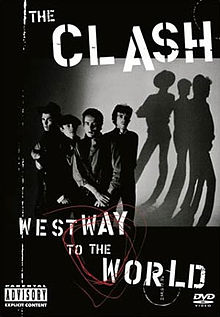
Noir Music from The Clash


 SOMEBODY GOT MURDERED – THE CLASH

 Somebody got murdered,
His name cannot be found,
A small stain on the pavement,
They'll scrub it off the ground.


GUNS OF BRIXTON – THE CLASH

 
When they kick at your front door,
How you gonna come?
With your hands on your head,
Or on the trigger of your gun.


LONDON CALLING -- THE CLASH


London calling to the imitation zone,
Forget it, brother, you can go it alone,
London calling to the zombies of death,
Quit holding out, and draw another breath,
London calling, and I don’t wanna shout,
But while we were talking, I saw you nodding out,
London calling, see we ain’t got no high,
Except for that one with the yellowy eyes.

The ice age is coming, the sun’s zooming in,
Engines stop running, the wheat is growing thin,
A nuclear error, but I have no fear,
‘Cause London is drowning, and I live by the river.


From: http://pauldmarks.tumblr.com/ 
Facebook: www.facebook.com/paul.d.marks 

Saturday, June 30, 2012


La Crescenta Library Event – July 2012


Ashley Ream & Paul D. Marks
Join Paul, Sue Ann Jaffarian (author of the Ghost of Granny Apples Mystery series and the Madison Rose Vampire Mystery series, and Michael Mallory (author of The Mural and the Amelia Watson Mystery series) for a panel/discussion on "Things That Go Bump in the Night".

When:  Saturday, July 28, 2012, 2:00 PM

Where: La Crescenta Library
            2809 Foothill Blvd.
            La Crescenta, CA, 91214

Thursday, April 26, 2012

WOULD YOU TALK SOMEONE OUT OF BUYING YOUR NOVEL? -- I DID.


I was at the Sisters in Crime/Los Angeles booth at the L.A. Times Book Festival at USC over the weekend, selling my new novel WHITE HEAT, as well as several anthologies in which stories of mine appear.  I've been going for several years, though this is the first time I've had a novel that was all me to sell.  So that was exciting.

And it's always nice to socialize with both the public and my fellow Sisters…and Brothers in Crime.  To see people I haven't seen for awhile and meet new fellow crimesters.

But the main objects are to increase the visibility of Sisters in Crime and, of course, to try to sell books.  So why would I try to talk someone out of buying my new novel that I want as much attention and word of mouth as possible for?

Early in my time at the booth a woman came by and talked to me about the various anthologies and the novel.  We had a nice conversation about the books and other things.  And she seemed interested, but ultimately didn't buy anything.  I didn't think anymore of it.

But awhile later she returned with a young man in tow.  He looked to be about fifteen and it appeared from their conversation that she wanted to buy the novel for him.  I was happy that she'd returned and wanted to buy a book.

However, since the book was clearly for her son I felt like I had to say something about the content.

To give you an idea of what the book is about here's the blurb for it: WHITE HEAT is a mystery-thriller that takes place during the 1992 "Rodney King" riots in Los Angeles.  P.I. Duke Rogers finds himself in a racially charged situation.  The case might have to wait....  The immediate problem: getting out of South Central Los Angeles in one piece – during the 1992 L.A. riots  – and that's just the beginning of his problems.  And while he tries to track down the killer he must also deal with the racism of his partner, Jack, and from the dead woman's brother, Warren.  He must also confront his own possible latent racism – even as he's in an interracial relationship with the murder victim's sister.

On the surface the story is a mystery-thriller.  But it also deals with the harsh realities of race and racism.  And in doing so some of the characters use extremely offensive language, from the F word to various racial epithets.  Reviewer M2 says this of White Heat: "'White Heat' is a tough, tersely-written book featuring tough, complicated, and not always lovable characters who might push many readers to the very edge of their comfort zone. But it's honest and it's real, and it doesn't pander to its audience by providing pat or phony answers to the many complex issues it raises."

And while I want as many readers as possible and want people to enjoy the novel on both the plot and deeper levels, I felt I had to warn the young man's mother about the various intense aspects of the book. The choice was hers and she ultimately chose not to buy it and I lost a sale.

I don't believe in censorship of any kind, but this was, in a sense, self-censorship.  When it came to someone as young as this kid I felt it was my obligation to tell his mother and let her or them make up their minds.  I'm not sorry I told them and maybe someday he will read it.

What would you have done?